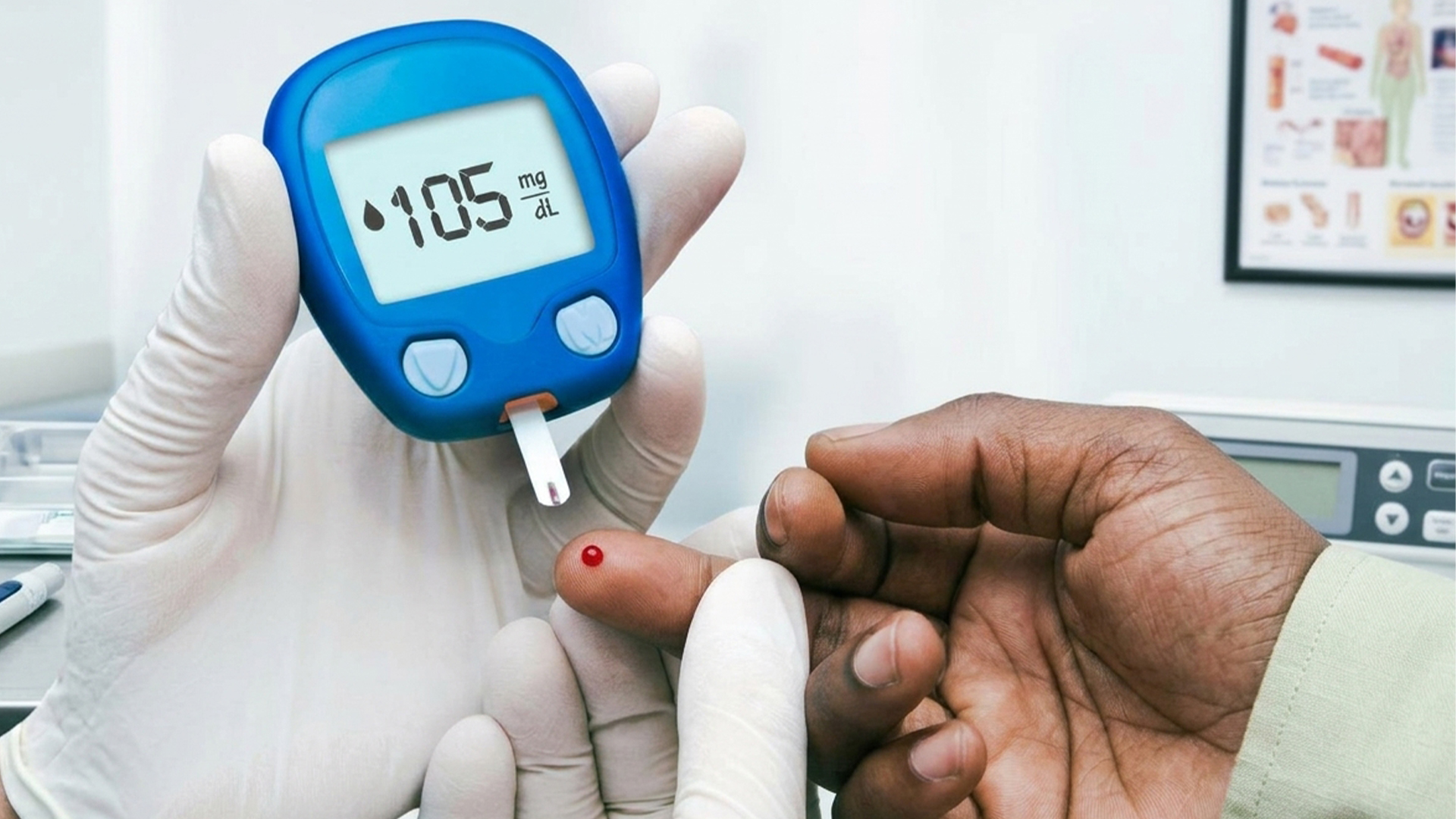
Research highlights the need for personalised diabetes care to reduce the risk of cardiovascular complications.
As the world prepares to commemorate World Diabetes Day, research from the Kwame Nkrumah University of Science and Technology (KNUST), College of Health Sciences, is drawing attention to the different cardiovascular risks faced by people living with Type 2 Diabetes Mellitus (T2DM) in Ghana.
The study, titled “Differential Risk of Cardiovascular Complications in Patients with Type-2 Diabetes Mellitus in Ghana: A Hospital-Based Cross-Sectional Study,” was published in the internationally recognised PLOS ONE journal on February 6, 2025. It provides important insights into how differences in body fat, blood sugar control and insulin resistance can influence the risk of cardiovascular complications among people with diabetes.
The research was led by Professor Christian Obirikorang, alongside Evans Asamoah Adu, Dr Anthony Afum-Adjei Awuah, Samuel Nkansah Darko, Frank Naku Ghartey, Samuel Ametepe, Eric N. Y. Nyarko, Enoch Odame Anto, and Professor William Kwame Boakye Ansah Owiredu. The researchers were drawn from the Department of Molecular Medicine, School of Medical Sciences, and the Department of Medical Diagnostics, Faculty of Allied Health Sciences, KNUST, as well as collaborating institutions in Ghana and Australia.
Understanding the Research
Recognising that people living with Type 2 diabetes do not necessarily share the same health risks, the researchers sought to identify distinct groups of patients based on their metabolic and cardiovascular risk profiles.
The study involved 341 patients with Type 2 diabetes, comprising 238 women and 103 men, who were receiving treatment at the Eastern Regional Hospital in Koforidua. Conducted between July and October 2021, the research adopted a hospital-based cross-sectional design, using systematic random sampling to select eligible participants.
Data was collected through structured questionnaires covering participants' demographic information, medical history, treatment and lifestyle factors. The researchers also took physical measurements, including height, weight, waist circumference and blood pressure. Fasting blood samples were analysed to assess blood glucose, glycated haemoglobin (HbA1c), cholesterol and triglyceride levels.
To identify patterns among the participants, the team employed a statistical technique known as K-means cluster analysis. This computer-assisted method grouped patients with similar metabolic characteristics. The researchers then used regression analysis and the Framingham Risk Score to assess the relationship between these groups and their estimated risk of cardiovascular disease.
What the Researchers Discovered
The findings revealed that people living with Type 2 diabetes have different metabolic characteristics and do not face the same level of cardiovascular risk.
Among the women, three distinct groups were identified, including those with obesity-related characteristics, those with severe insulin resistance and poor blood sugar control, and those with relatively normal weight and improved insulin resistance.
Among the men, two major groups emerged: those with obesity-related characteristics and severe insulin resistance, and those with relatively normal weight and improved insulin sensitivity.
Of particular concern was the group of women with severe insulin resistance, which was associated with more than five times the odds of being in the high cardiovascular risk category compared with the reference group. This group also had approximately seven times the odds of metabolic syndrome.
Similarly, men in the obesity-related group with severe insulin resistance had significantly higher odds of intermediate and high cardiovascular risk. Their odds of being in the intermediate-risk category were approximately 22 times higher, while those in the high-risk category were nearly seven times higher than the reference group.
These findings demonstrate that obesity, insulin resistance and poor blood glucose control can increase the risk of cardiovascular complications among people with Type 2 diabetes.
Implications for Diabetes Management
The research underscores the importance of moving beyond a one-size-fits-all approach to diabetes management. While monitoring blood sugar remains essential, the study highlights the need for healthcare professionals to pay closer attention to other metabolic indicators, including body fat distribution, insulin resistance and cholesterol levels, when assessing patients.
By identifying patients who may be more vulnerable to cardiovascular complications, the findings provide useful baseline evidence to support more personalised approaches to diabetes management, early risk identification and targeted interventions.
The researchers also acknowledge that further studies involving larger populations and more comprehensive research designs are needed to validate the findings and establish how this risk patterns may influence the long-term development of cardiovascular disease.
As the world marks World Diabetes Day under the broader call for improved diabetes awareness, prevention and care, this KNUST research reinforces an important message: understanding the individual health profile of people living with diabetes is essential to improving treatment outcomes and reducing the risk of life-threatening complications.
Read the full research article in PLOS ONE: https://doi.org/10.1371/journal.pone.0302912